Snow-Melt for Small Areas: Heating Just the Steps, Landing or Ramp You Need
Practical guidance for homeowners and small businesses on designing partial-coverage snow-melt systems for steps, landings, and short ramps — covering when partial coverage is cost-effective, key design considerations, controls, and how SmartHeat approaches these projects.

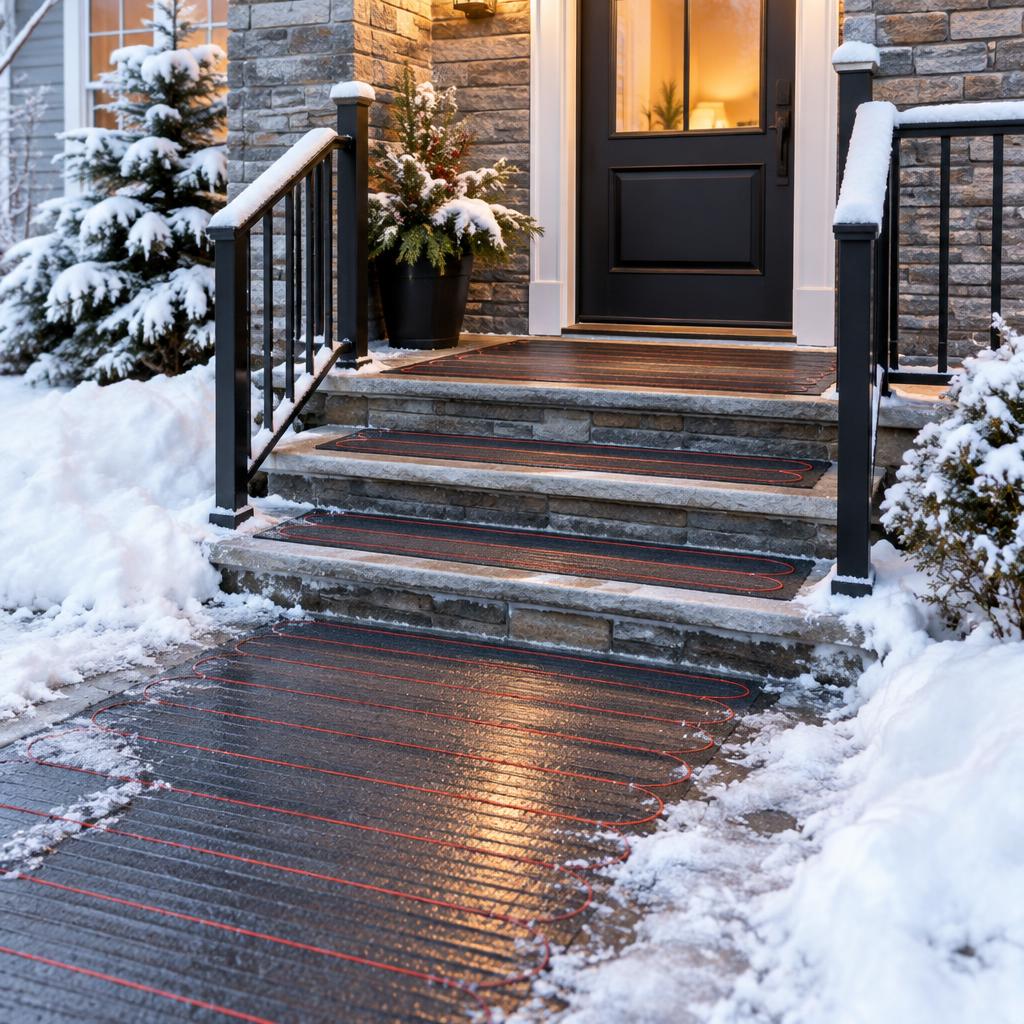
Why consider partial snow-melt instead of a full heated driveway
Not every property needs a fully heated driveway. For many homeowners and small businesses the most critical slipping hazards are concentrated: front steps, a short entry landing, a wheelchair ramp, or the path from a parking stall to a doorway. Partial-coverage snow-melt systems focus heat where it matters, reducing labor for shoveling and deicing and improving safety for residents and visitors while avoiding the higher material and operating costs of warming an entire driveway.
What partial-coverage design looks like
Partial designs commonly heat the high-traffic, high-risk surfaces rather than the entire pavement area. Typical configurations include a single stair run and landing, an L-shaped landing with the adjacent step, a 3–6 foot path from the curb or parking spot to an entry, or a short length of ramp. Systems can use embedded electric heating elements under concrete, pavers, or beneath a thin aggregate surface; SmartHeat also integrates controls and sensors so heat is applied only when needed.
When partial coverage is most cost-effective
Partial snow-melt is usually most economical when the area to protect is small and concentrated — generally for steps, landings, short ramps, and short walkways. It becomes especially attractive for locations where manual snow removal is difficult or where deicing chemicals would harm nearby landscaping or building finishes. Cost-effectiveness depends on surface area, local climate and snowfall frequency, and available electrical capacity; a targeted install uses less material and typically requires less runtime than a larger system.
Site and installation considerations
Before design and installation, evaluate surface material, slope and drainage, clearances, and electrical access. Proper drainage and surface slope prevent standing water that can refreeze away from the heated zones. For concrete and pavers, heating elements are embedded at installation or placed beneath a suitable base during retrofit work. Electrical service capacity and routing matter for even small projects; sometimes a dedicated circuit is required. SmartHeat’s team is experienced in coordinating with contractors and electricians to make challenging installations feasible.
Controls, sensors and energy efficiency
Smart controls and sensors are central to cost-effective partial systems. Automated snow and ice sensors detect precipitation and temperature, enabling the system to run only when melting is required. Time-of-use strategies and zoned control further reduce operating cost by limiting runtime to critical periods and using off-peak electricity where available. Thermostats and smart control integration allow owners to schedule, monitor, and override operation remotely as conditions demand.
What to expect from SmartHeat on a small-area project
SmartHeat’s experience with electric radiant and snow-melt systems means they focus on a discreet, reliable installation that minimizes visual impact and maintenance. Customers consistently report professional guidance and hands-on support through design and installation; in at least one instance the team worked with other trades to complete an installation that partners initially thought would be impractical. For small-area jobs, SmartHeat typically assists with layout advice, sensor and control selection, and coordination with the electrician or contractor handling the electrical connection.
Next steps: planning your partial snow-melt project
If you are considering snow-melt for steps, a landing, or a short ramp, start by measuring the area and noting surface type and access to electrical service. Ask for a site review and a design that prioritizes drainage, sensor placement, and control logic. SmartHeat is headquartered in Aberdeen, SD and designs systems for residential and commercial projects across the U.S.; their portfolio includes automated snow-and-ice systems and smart control integration. A short consultation will clarify whether a targeted snow-melt zone is the right balance of safety and cost for your property.
Customer review


Article by
SmartHeat
SmartHeat – Radiant Heating & Snow Melt Systems Silent. Motionless. Invisible. Since 2007, SmartHeat has designed and installed electric radiant heating systems for both residential and commercial projects across the U.S. We specialize in heating solutions that are efficient, seamless, and unobtrusive — including: In-floor heating In-ceiling heating (including custom configurations) Concrete slab heating systems Automated snow & ice melt systems for driveways, walkways, parking lots Thermostats & smart control systems We focus on energy efficiency, comfort, safety, and aesthetics. Our systems use off-peak electricity, zoned control, and sensors to reduce costs. There are no noisy fans, no visible radiators, and minimal maintenance.