Snow‑and‑Ice Melt Systems vs. Plowing, Shoveling, and De‑icers: Safety, Liability, and Long‑Term Cost
Practical comparison of automated snow‑and‑ice melt systems and traditional snow removal methods, covering slip‑and‑fall risk, surface damage, accessibility, and the long‑term cost considerations homeowners and small businesses should weigh.
An overview: what automated snow‑and‑ice melt systems are
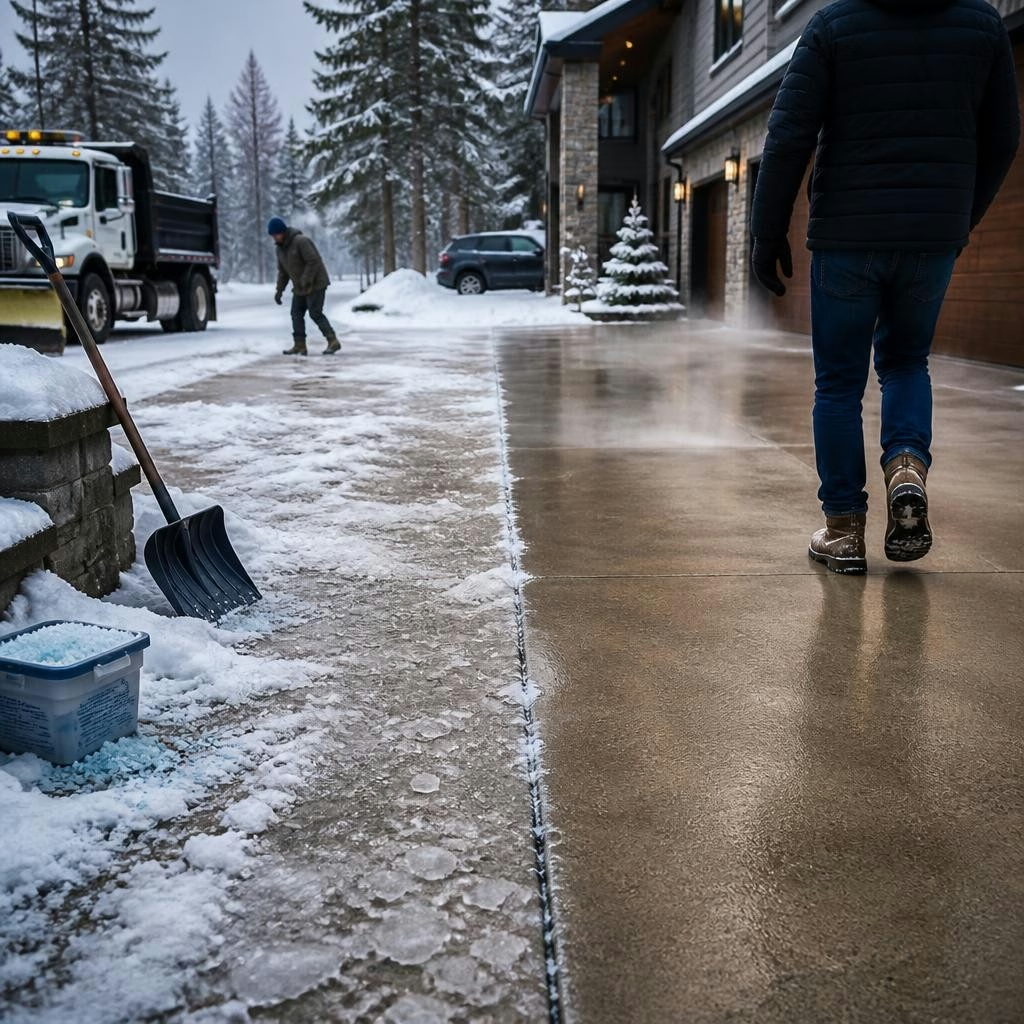
Automated snow‑and‑ice melt systems use embedded electric heating elements or heated mats under driveways, walkways, and small parking areas to prevent snow and ice from bonding to the surface. These systems activate automatically through temperature and moisture sensors or through scheduled controls, melting precipitation as it falls so surfaces remain clear without manual labor. Smart controls and zoning let owners target only the areas they need to keep safe and accessible.
How these systems operate and their key components
Typical components include heating cables or mats installed beneath the pavement, sensors that detect temperature and moisture, a controller or thermostat, and wiring to an electrical panel. Modern setups support zoned control and automation so only selected areas heat when conditions require it. Systems are electrically driven and can be programmed to operate during off‑peak hours or to respond only when sensors detect active snowfall or freezing conditions, which helps manage ongoing energy use.
Safety: reducing slip‑and‑fall risk compared with traditional methods
Automated melt systems keep walking and driving surfaces free of ice and compacted snow, substantially reducing the immediate slip‑and‑fall hazard that can remain after shoveling or plowing. Manual removal can leave patches of ice or uneven surfaces, and chemical de‑icers can be inconsistent in extreme cold. While no solution eliminates all risk, an active melt system offers continuous protection during storms and in the hours after, improving safety for residents, visitors, and customers.
Liability and accessibility considerations for homeowners and small businesses
Keeping entryways, ramps, and parking areas clear supports accessibility and lowers the chance of incidents that lead to claims. For small businesses, consistently clear walkways can reduce customer complaints and potential liability exposure. That said, property owners should still confirm local ordinances, lease agreements, and insurance requirements—an automated system is a risk‑reduction measure, not a legal substitute for compliance with local rules or posted obligations.
Surface damage, environmental effects, and maintenance
Repeated use of chemical de‑icers and abrasive treatments can accelerate surface deterioration over time and may harm landscaping nearby. Heavy plowing can nick concrete or asphalt edges and push gravel from unbound surfaces. By contrast, an embedded electric system avoids abrasive contact and corrosive chemicals on the treated surface; routine maintenance is typically limited to controller checks and occasional visual inspections. As with any system, proper installation and correct surface preparation are important to minimize long‑term issues.
Long‑term cost of ownership: upfront investment versus recurring expenses
Automated melt systems require a larger initial investment for materials and professional installation, while plowing, shoveling, and chemical supplies present lower startup costs but recurring annual expenses and labor. Over time, recurring plow contracts, salt purchases, and potential surface repairs can add up. Energy costs for melt systems can be managed with zoned controls, sensors, and off‑peak scheduling. Long‑term customer feedback for electric radiant systems highlights durable performance and reliable operation over many years, which is an important factor when comparing lifetime costs.
Deciding if a snow‑melt system is right for you and next steps
Consider these factors: the size and slope of the area to be protected, frequency and intensity of winter storms, priorities for accessibility and liability reduction, local code or insurance requirements, and budget for upfront versus ongoing expenses. For homeowners or small businesses in and around Aberdeen, SD and the broader service area, a site assessment can determine whether a targeted automated system or a hybrid approach makes sense (for example, heated primary walkways plus occasional plowing for larger lots). Contacting an experienced installer to evaluate the site, review control options, and provide a comparative overview of expected maintenance and energy use is the practical next step.
Customer review


Article by
SmartHeat
SmartHeat – Radiant Heating & Snow Melt Systems Silent. Motionless. Invisible. Since 2007, SmartHeat has designed and installed electric radiant heating systems for both residential and commercial projects across the U.S. We specialize in heating solutions that are efficient, seamless, and unobtrusive — including: In-floor heating In-ceiling heating (including custom configurations) Concrete slab heating systems Automated snow & ice melt systems for driveways, walkways, parking lots Thermostats & smart control systems We focus on energy efficiency, comfort, safety, and aesthetics. Our systems use off-peak electricity, zoned control, and sensors to reduce costs. There are no noisy fans, no visible radiators, and minimal maintenance.