Energy‑Efficient Heating Upgrades for Older Homes in Aberdeen and the Upper Midwest
Practical guidance for owners of drafty or older homes who want to improve comfort and efficiency with radiant heating, including priority zones, retrofit options, insulation measures, and smart controls.

Why older homes in the Upper Midwest need a different approach
Many homes built before modern insulation and air‑sealing standards were intended to tolerate more heat loss and larger, centralized heating systems. In Aberdeen and across the Upper Midwest, long, cold winters make comfort and operating cost important considerations. Upgrading the heating strategy in an older house is not just about adding more heat; it’s about delivering warmth where people spend time, reducing waste through zoning and controls, and improving the building envelope so the new system can work efficiently.
What radiant heating offers for retrofit projects
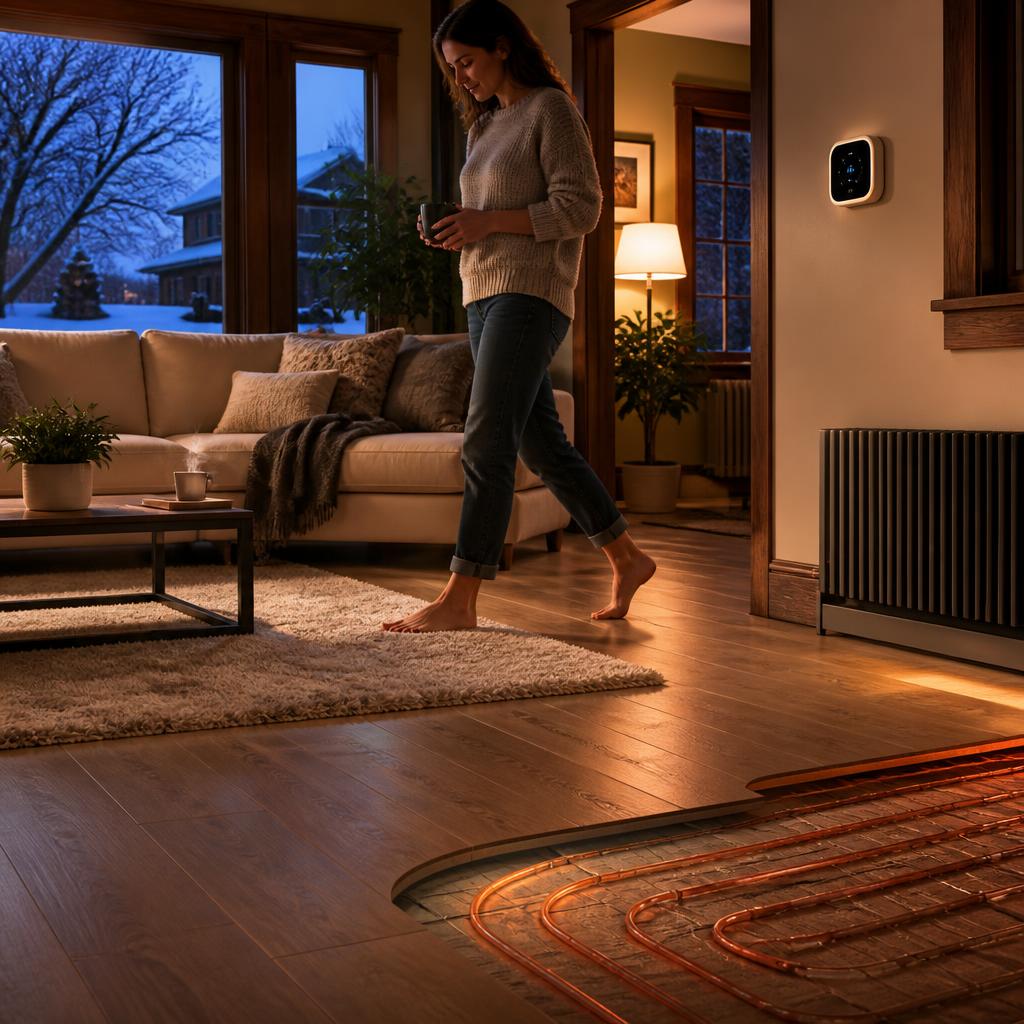
Radiant heating—installed under floors, in ceilings, or in concrete slabs—provides quiet, even warmth without visible radiators or forced‑air drafts. Because panels and mats operate without fans or moving parts, they can be simpler to maintain and less obtrusive in historic or remodeled interiors. SmartHeat’s approach emphasizes energy efficiency through zoned control, sensors and off‑peak scheduling, which help keep operating costs down while improving comfort.
Which rooms and zones to prioritize
When upgrading an older home, prioritize areas that deliver the greatest comfort benefit for the least disruption: bathrooms and entryways (where cold surfaces and floors are most noticeable), primary living spaces like family rooms and kitchens, lower levels or basements that are hard to heat evenly with a furnace, and bedrooms where individualized control improves sleeping comfort. In some houses a targeted approach—adding radiant to a few high‑use zones—gives immediate quality‑of‑life improvements without a full system overhaul.
Practical retrofit options: in‑ceiling, in‑floor and slab systems
Retrofit choices depend on floor construction and how much you want to alter existing finishes. In‑ceiling panels are often a strong option when access to floors is limited: they can deliver comfortable heat into rooms without replacing subfloors. In‑floor systems are ideal when re‑flooring or during renovations because they provide the familiar ‘warm‑floor’ feel. Concrete slab or slab‑based systems are suitable when you have exposed concrete or are planning a slab renovation. Discussing the house’s construction with an installer will identify the least invasive, most cost‑effective path.
Don’t forget insulation and air sealing
Radiant heat performs best when the building envelope is addressed first. Adding insulation to attics, sealing rim joists and windows, and improving door thresholds reduce the heat load and allow a smaller, more efficient radiant system to meet comfort goals. Even modest air‑sealing and targeted insulation improvements can cut operating hours and improve the responsiveness of zoned radiant controls.
Zoning and smart controls to maximize savings
Individual thermostats for rooms or zones let you match heating to actual usage—lowering setpoints in guest rooms and raising them in occupied spaces—so energy isn’t wasted heating empty areas. Smart controls, occupancy sensors and off‑peak scheduling further improve efficiency by running panels when electricity rates or demand are favorable. Customers consistently report that room‑by‑room thermostats and warm floors noticeably increase comfort while preventing needless energy use.
How to take the next step with SmartHeat
If you’re considering upgrades, start with a site evaluation that reviews existing heating equipment, insulation levels, and the rooms you use most. SmartHeat designs in‑floor, in‑ceiling and slab systems and can propose zoning and control options tailored to older homes in Aberdeen and throughout the Upper Midwest. Expect a recommendation that balances comfort goals, installation disruption, and operating efficiency. Many homeowners find a phased approach—targeting a few key zones first—lets them experience benefits quickly while planning larger improvements over time.
Customer review


Article by
SmartHeat
SmartHeat – Radiant Heating & Snow Melt Systems Silent. Motionless. Invisible. Since 2007, SmartHeat has designed and installed electric radiant heating systems for both residential and commercial projects across the U.S. We specialize in heating solutions that are efficient, seamless, and unobtrusive — including: In-floor heating In-ceiling heating (including custom configurations) Concrete slab heating systems Automated snow & ice melt systems for driveways, walkways, parking lots Thermostats & smart control systems We focus on energy efficiency, comfort, safety, and aesthetics. Our systems use off-peak electricity, zoned control, and sensors to reduce costs. There are no noisy fans, no visible radiators, and minimal maintenance.