Electric Radiant Heat vs. Forced‑Air Furnaces: What South Dakota Homeowners Should Know
A practical comparison of electric radiant heating and traditional forced‑air systems for Aberdeen and Upper Midwest homes, covering comfort, noise, air quality, energy patterns, and when a hybrid approach is the best choice.

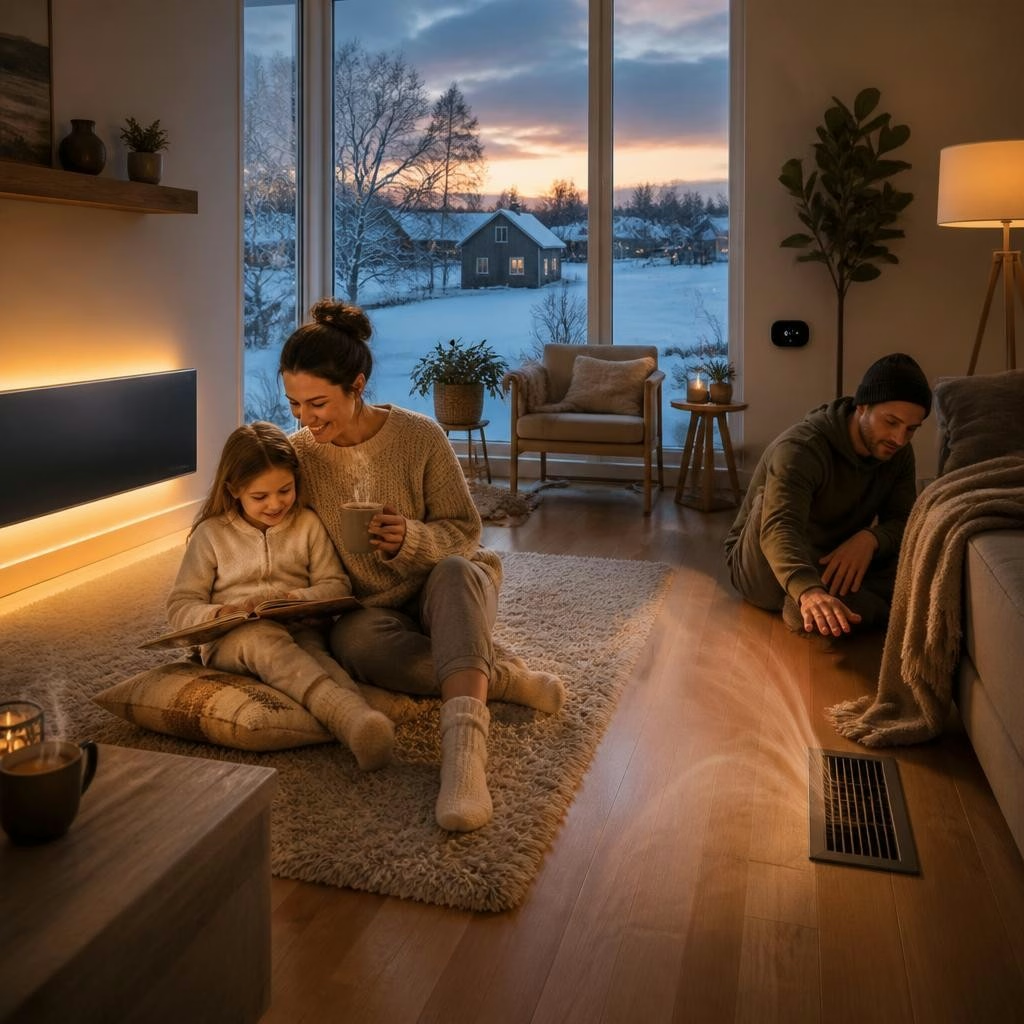
Why this comparison matters in Aberdeen and the Upper Midwest
Winters in Aberdeen and the surrounding Upper Midwest are long and cold, so heating decisions affect comfort, energy use, and long‑term satisfaction. Homeowners choosing between electric radiant systems and forced‑air furnaces should consider how each system delivers heat, how it affects indoor air and noise, and how it fits with an existing home layout. This article lays out the practical differences and points to consider when planning new installations, replacements, or hybrid systems.
How electric radiant systems work (and what SmartHeat installs)
Electric radiant heat raises the temperature of floors, ceilings, or slabs using embedded electric heating panels or cables. SmartHeat’s offerings include in‑floor panels, in‑ceiling panels, and concrete slab heating; each option transfers heat directly to surfaces that then warm the room. These systems pair with thermostats and smart controls so rooms can be zoned independently. Radiant systems rely on thermal transfer instead of blowing air, and can be used alone or alongside other systems depending on goals and building constraints.
Comfort and heat distribution: radiant vs forced air
Radiant heat tends to produce even, steady warmth from surfaces inward, which many homeowners describe as cozy and “no cold feet” comfort. Forced‑air furnaces heat and move air through ductwork, which can warm rooms quickly but sometimes creates temperature stratification and brief bursts of warm air. For spaces where even surface warmth matters—bathrooms, family rooms, or large shops—radiant solutions are often preferred; several customers report consistent, comfortable heat in both homes and large shop spaces after switching to radiant panels.
Noise, air quality, and indoor environment
One clear difference is noise. Radiant systems are essentially silent because they have few or no moving parts, whereas forced‑air systems use fans and blowers that cycle on and off. Radiant heating also reduces the circulation of dust and airborne particulates caused by ducted airflows, which some occupants find makes the indoor environment feel cleaner. That said, forced‑air systems provide a straightforward pathway for central air conditioning and whole‑home ventilation, so tradeoffs between air movement and ventilation needs are part of the decision.
Energy patterns, controls, and efficiency considerations
Electric radiant systems can be highly controllable with room‑by‑room thermostats and zoning, allowing owners to heat only occupied spaces. Where time‑of‑use or off‑peak electric rates are available, radiant systems that leverage thermal mass (such as slab systems) can store heat and reduce costs by running more when rates are lower. Modern forced‑air furnaces and heat pumps can also be efficient—especially when paired with well‑sealed ducts and high‑efficiency equipment—so energy performance depends on system design, controls, and house insulation more than on the heat delivery method alone.
When a hybrid setup makes sense
Hybrid systems—using radiant heat in living areas and a forced‑air furnace or heat pump for whole‑house ventilation, rapid heat during extreme cold, or central air conditioning—are common. Hybrids are particularly useful in homes with existing ductwork where owners want the comfort of radiant in specific rooms (basements, bathrooms, bedrooms) while maintaining central AC and fresh‑air distribution. Real‑world examples include homeowners replacing a problematic lower‑level furnace with in‑ceiling radiant panels while keeping other levels on conventional heat, and shop owners choosing radiant panels for even heat in large open spaces.
Installation, maintenance, and practical tradeoffs
Installation considerations vary: in‑floor radiant is easiest in new builds or during major remodels, while in‑ceiling panels or slab systems can be better choices for some retrofits. Radiant systems have minimal routine maintenance compared with furnace systems that require filter changes, duct cleaning, and annual tune‑ups. However, radiant elements are embedded and planning is important—zoning, thermostat placement, and floor or ceiling finishes affect performance. Customers consistently note professional installation and long‑term reliability as important factors when selecting a provider.
Next steps for Aberdeen‑area homeowners
If you’re weighing options, start with a room‑by‑room assessment: note which spaces need even surface warmth, which require rapid temperature changes, and whether you need central AC or whole‑house ventilation. Ask potential contractors about zoning options, thermostat control, use of off‑peak electricity, and experience with similar local projects. SmartHeat, based in Aberdeen, SD, specializes in electric radiant systems—panels for floors and ceilings, slab heating, smart controls, and automated snow‑melt systems—and many customers cite reliable performance and professional service when describing their installations. A site visit and a heating plan tailored to your home will clarify whether radiant, forced‑air, or a hybrid solution best meets your needs.
Article by
SmartHeat
SmartHeat – Radiant Heating & Snow Melt Systems Silent. Motionless. Invisible. Since 2007, SmartHeat has designed and installed electric radiant heating systems for both residential and commercial projects across the U.S. We specialize in heating solutions that are efficient, seamless, and unobtrusive — including: In-floor heating In-ceiling heating (including custom configurations) Concrete slab heating systems Automated snow & ice melt systems for driveways, walkways, parking lots Thermostats & smart control systems We focus on energy efficiency, comfort, safety, and aesthetics. Our systems use off-peak electricity, zoned control, and sensors to reduce costs. There are no noisy fans, no visible radiators, and minimal maintenance.