Designing Snow Melt Systems for Steep Driveways and Tricky Walkways
Practical guidance for homeowners on planning partial-coverage electric snow melt systems for steep or shaded driveways, steps, and entry paths—including layout options, sensor placement, and energy-smart controls.

Why steep and shaded areas need a tailored snow-melt approach
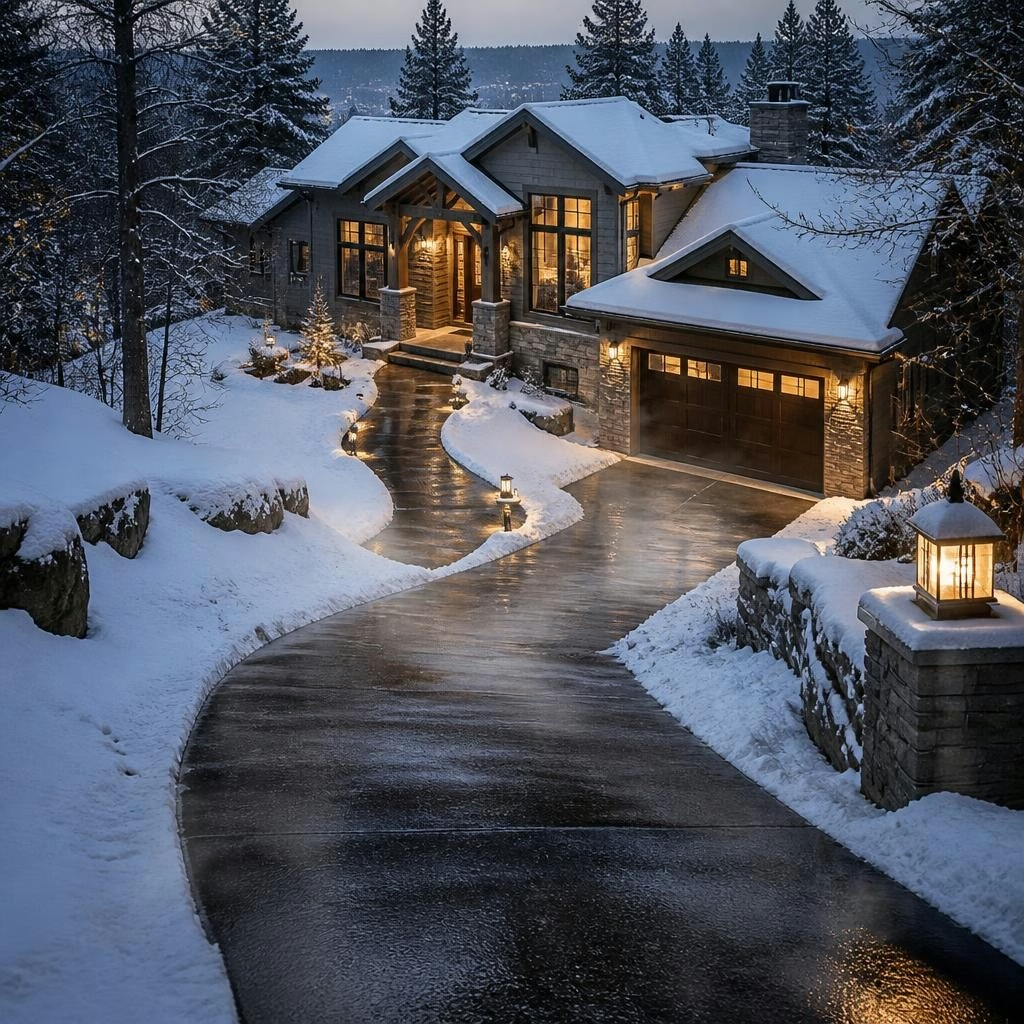
Steep driveways, shaded approaches, steps, and entry paths collect and hold snow and ice differently than flat, sun-exposed surfaces. Melted snow can refreeze quickly on slopes and in corners, and shaded areas or places under eaves often stay colder longer. A whole-driveway solution is unnecessary in many homes; targeted, well-designed heating in high-risk zones improves safety while reducing energy use and installation cost.
Choosing partial-coverage layouts that work
Partial-coverage strategies focus heat where it matters most. Common layouts include heated tire tracks for angled or long driveways, warmed wheel paths for straight driveways, heated landing zones at garage doors and walkways, and full-coverage on steps and stoops. For entryways or narrow walkways, continuous coverage may be appropriate. The right pattern depends on slope, typical snow accumulation, and how the homeowner uses each area.
Key sensor placement and how automation helps
Effective sensor placement makes automation reliable and efficient. Pavement or combination temperature-and-moisture sensors should be located where snow first contacts the surface and where water tends to collect—low points, shaded sections, and near steps or landings. For long or complex drives, use multiple sensors zoned to the heated areas so each zone activates only when needed. Automated controls and smart thermostats can prevent unnecessary runtime by responding to actual pavement conditions rather than just air temperature.
Design considerations for steep slopes and transitions
On steep slopes, pay attention to transition zones such as the top of the driveway, apron at the street, and connections to sidewalks—these spots can be slip hazards. Heating elements should run continuously across steps and landings; on inclines, align heating paths with natural tire or foot traffic and avoid leaving untreated narrow bands where ice can form. Surface material, expansion joints, and edge details must be accommodated so the heating system doesn't interfere with drainage or freeze-thaw movement.
Installation choices: retrofit versus new construction
Electric snow-melt systems are often installed in new concrete or under a planned paving surface, but many retrofits are also feasible. In retrofit situations, shallow electric cable or mat systems can be placed under overlays or between layers depending on the surface. New construction allows for optimal placement and integration with drainage. In every case, careful coordination with the paving contractor or concrete crew is important to protect the heating element and preserve long-term performance.
Energy, safety and maintenance best practices
To keep operating costs reasonable, zone the system and use sensors and smart controls to run only when needed. Scheduling to take advantage of off-peak electricity and setting clear activation logic for sensors reduces runtime. Snow-melt systems require minimal routine maintenance, but occasional inspections of control components, sensors, and junction points ensure reliable seasonal performance. Prioritize safety by keeping steps and primary walkways heated rather than attempting to heat every square foot.
Working with SmartHeat: expertise and next steps
SmartHeat designs electric radiant and automated snow-melt systems that emphasize zoned control, sensors, and energy-efficiency—making partial-coverage installations a practical option for steep or shaded properties. Customers regularly note the company’s professionalism and dependable service when planning projects over time. If you have a steep driveway, tricky entry path, or shaded steps, a site evaluation will identify the high-risk zones, recommended layout, and control strategy best suited to your property. SmartHeat is based in Aberdeen, SD, and provides design and installation support for clients across cold-climate regions; contact the company to discuss a site assessment and a tailored snow-melt plan.
Customer review


Article by
SmartHeat
SmartHeat – Radiant Heating & Snow Melt Systems Silent. Motionless. Invisible. Since 2007, SmartHeat has designed and installed electric radiant heating systems for both residential and commercial projects across the U.S. We specialize in heating solutions that are efficient, seamless, and unobtrusive — including: In-floor heating In-ceiling heating (including custom configurations) Concrete slab heating systems Automated snow & ice melt systems for driveways, walkways, parking lots Thermostats & smart control systems We focus on energy efficiency, comfort, safety, and aesthetics. Our systems use off-peak electricity, zoned control, and sensors to reduce costs. There are no noisy fans, no visible radiators, and minimal maintenance.