Can Electric Radiant Heat Work with Off-Peak Power Programs in the Upper Midwest?
A practical guide for homeowners in South Dakota, North Dakota, Minnesota and nearby states on pairing electric radiant heating with off-peak or time-of-use electricity programs, including what to ask your utility, how slab thermal storage works, and realistic expectations for savings and comfort.

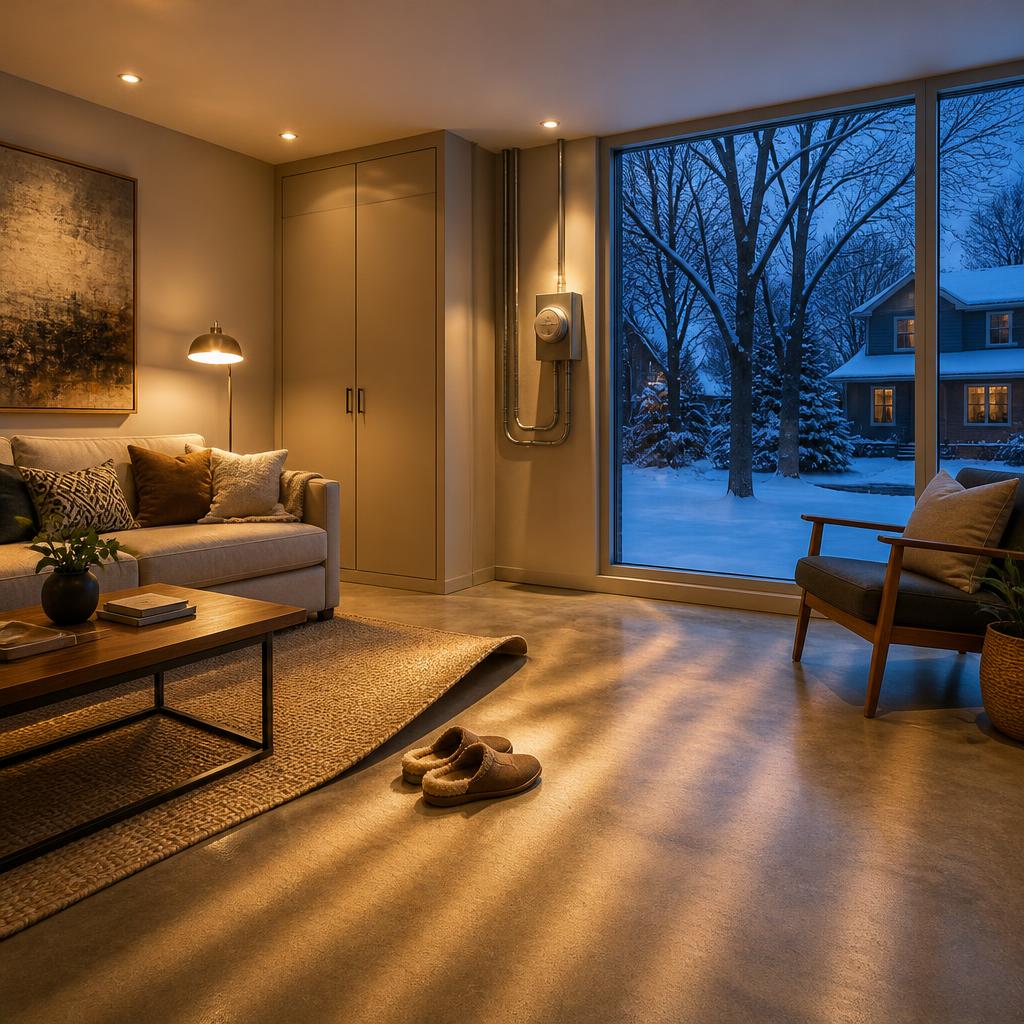
Why off-peak pairing matters in the Upper Midwest
Cold winters across South Dakota, North Dakota, Minnesota and neighboring states make heating a major annual expense. Electric radiant heat — whether in-floor panels, in-ceiling panels, or heated concrete slabs — can be an excellent match for utilities that offer lower rates during off-peak hours. By scheduling the bulk of energy use when electricity is cheaper and relying on thermal mass or smart control to hold heat during peak periods, homeowners can improve comfort and manage operating costs without sacrificing performance.
How off-peak and time-of-use (TOU) programs typically work
Utilities use various rate structures: fixed off-peak hours (night/weekend), seasonal TOU schedules, or demand-based programs that lower energy costs if you shift load away from peak periods. Enrollment rules, exact hours, and how rates differ between periods vary by provider. Some programs require a special meter or have a signup process. In a practical sense, off-peak pairing means running electric heating elements primarily during low-rate windows and using building thermal mass or controls to maintain comfort when rates rise.
Key questions to ask your utility before you plan
When you contact your utility, get clear answers to: (1) What are the off-peak or TOU hours and do they change seasonally? (2) What is the rate differential between on-peak and off-peak periods? (3) Are special meters or enrollment steps required? (4) Are there interruptible or controlled-load programs and what are the terms? (5) Are there demand charges or minimums that could affect a large, continuous electric load? Collecting recent bills and a written rate schedule will make it easier for an installer or energy advisor to model likely savings.
How slab thermal storage (concrete slab heating) works
Slab thermal storage uses the mass of a concrete slab to store heat delivered during low-cost hours. Electric heating elements embedded in the slab warm the concrete during off-peak periods; the slab then releases heat slowly into the building over many hours. This approach is well suited to homes and commercial spaces where consistent, even heat is desirable. SmartHeat offers concrete slab heating and earth thermal storage options that are explicitly designed to take advantage of low-rate electricity windows by shifting the heating load.
Controls, zoning and practical design strategies
Good controls are essential to make off-peak pairing effective. Zoned thermostats, programmable schedules, room sensors, and smart control systems let you preheat specific areas during off-peak hours and reduce temperature in unused zones. Combining sensors with a reliable schedule prevents overheating while preserving comfort. For slab systems, control strategies favor gradual preheat and limited overnight boosts rather than rapid on-off cycling. Smart thermostats and timers that integrate TOU signals or utility rate data will automate the process and reduce the need for manual intervention.
Realistic expectations for bill savings and comfort
Savings from pairing radiant heat with off-peak programs depend on three main factors: how large the rate differential is, the building’s insulation and airtightness, and how well the heating system and controls are tuned. In many cases homeowners realize meaningful cost-shifting (moving energy use to cheaper hours) and improved comfort because radiant systems provide steady, even heat. Customer feedback for SmartHeat frequently praises the systems as simple, quiet, efficient and dependable, and many clients report long-term satisfaction with both home comfort and operational reliability. However, exact dollar savings vary by utility and home, so plan a site-specific analysis rather than relying on general percentage estimates.
Next steps: assessment, utility data, and working with an installer
Start by gathering 12 months of utility bills and the utility’s TOU or off-peak rate schedule. Ask your installer to model scenarios using those rates, building characteristics, and the preferred heating layout (in-floor, in-ceiling, or slab). SmartHeat’s team in Aberdeen, SD, and the broader service area can advise on system selection and control strategies; reviewers consistently note the company’s technical knowledge and hands-on support during complex projects. A professional assessment will clarify whether off-peak pairing with a radiant system will meet your comfort goals and financial expectations and identify the most effective control approach for your home.
Customer review


Article by
SmartHeat
SmartHeat – Radiant Heating & Snow Melt Systems Silent. Motionless. Invisible. Since 2007, SmartHeat has designed and installed electric radiant heating systems for both residential and commercial projects across the U.S. We specialize in heating solutions that are efficient, seamless, and unobtrusive — including: In-floor heating In-ceiling heating (including custom configurations) Concrete slab heating systems Automated snow & ice melt systems for driveways, walkways, parking lots Thermostats & smart control systems We focus on energy efficiency, comfort, safety, and aesthetics. Our systems use off-peak electricity, zoned control, and sensors to reduce costs. There are no noisy fans, no visible radiators, and minimal maintenance.